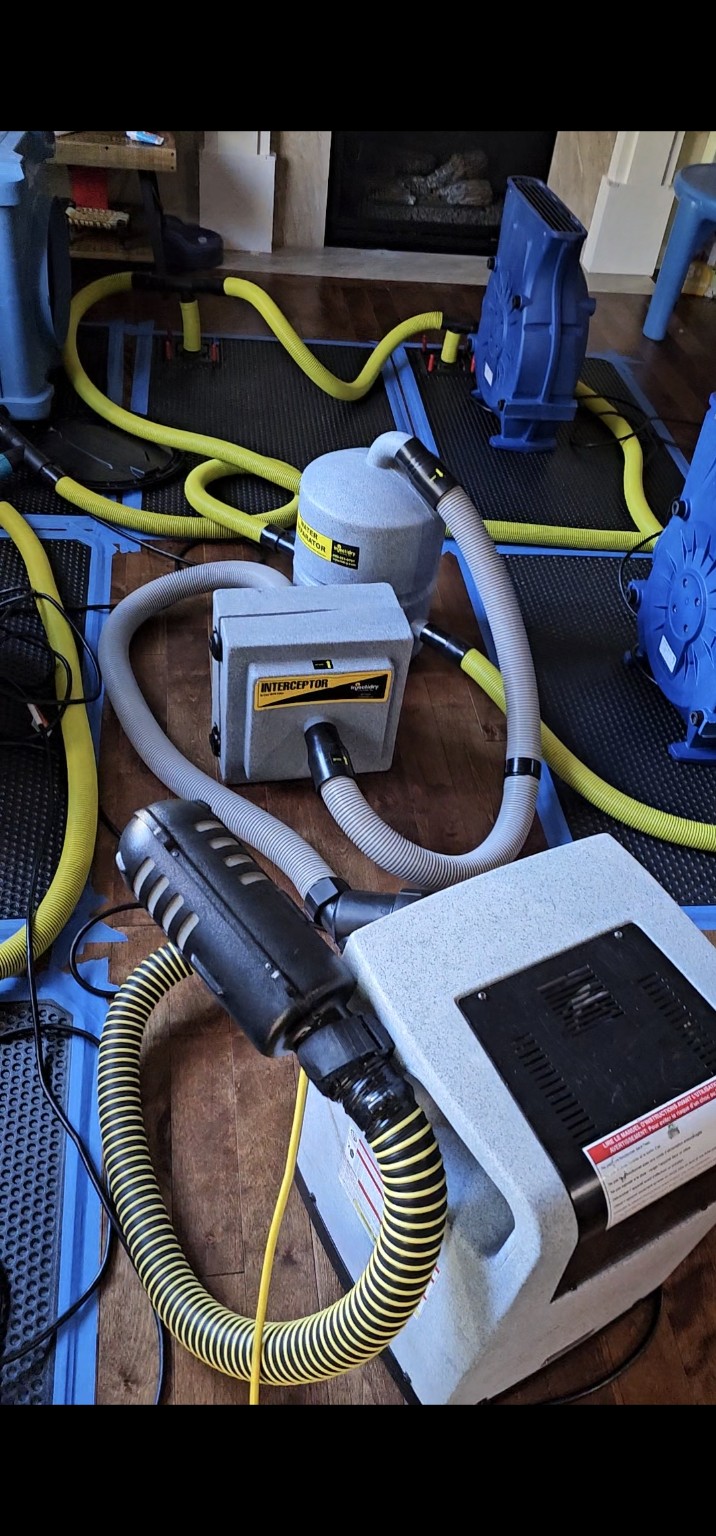
Injectidry floor-drying equipment with sealed panels and connected hoses. Photo supplied by AWDR.
Sometimes. Water-damaged hardwood does not automatically need complete replacement. But a surface that looks dry does not prove the boards and the material underneath are ready for repairs. The right decision depends on the water source, the flooring and subfloor condition, and measured moisture—not appearance alone. [1,2]
1. Call immediately about hardwood floor drying
Call AWDR as soon as water damage occurs. When notified immediately, our goal is to begin mitigation within about two hours of the incident, subject to crew availability, travel, safe access and site conditions.
Prompt assessment and appropriate Injectidry floor drying can help save suitable hardwood. Results depend on the water source, flooring construction, existing damage and moisture measurements in the flooring and subfloor; restoration is not guaranteed. [1,6,7]
2. Make the area safe first
Stop the leak only if you can do so safely. Never enter standing water to reach a breaker panel or operate electrical equipment. If electrical equipment has become wet, a qualified electrician should assess it before power is restored. [4]
Do not place fans in an affected area until the water has been determined clean and sanitary. Suspected sewage or other contamination needs appropriate professional assessment and precautions. EPA's initial drying guidance is for clean-water damage; it is not a guarantee that every wet floor can be saved. [3]
3. Check beneath the surface
Wood can swell as it absorbs moisture. Cupping is when a board's edges rise above its center. That shape alone does not tell you the full extent of damage—or whether the floor should be replaced. [1,5]
Ask for an assessment of both the flooring and the subfloor beneath it. Moisture measurements in affected and comparable unaffected areas can help evaluate the condition. Where appropriate, readings at different depths can reveal moisture that a surface check misses. [1]
Some minor damage may improve as wood dries. Buckling that has broken the floor's attachment is different: NWFA guidance calls for replacement of the affected portion. Damaged subflooring may also need repair or replacement. [1]
4. Do not sand a cupped floor too soon
Sanding may seem like a quick way to flatten raised edges. However, sanding while moisture remains uneven through a board can cause another problem later. As the wood equalizes, its center may end up higher than its edges—a condition called crowning. [2]
Before refinishing, have a qualified flooring professional confirm that the moisture problem is resolved and the floor is suitable for the proposed repair. A fixed number of drying days, or a floor that feels dry, is not enough to establish readiness. [1,2]
5. Ask these questions before approving work
Request a written explanation of the findings and proposed work:
- What type of flooring do I have, and how is it installed?
- Has water reached the subfloor or rooms below?
- What moisture readings were taken, and what will be monitored?
- Why do you recommend drying, partial repairs or replacement?
- When should a flooring specialist assess sanding or refinishing?
Ask the estimate to separate water removal and drying from flooring repairs. Confirm the price or billing basis, exclusions and any additional authorization needed before the scope expands.
Water-damage help in Greater Seattle
American Water Damage Restoration LLC serves Edmonds and communities across King and Snohomish Counties. Contact AWDR about water removal, moisture evaluation, controlled drying and restoration documentation.
Call (206) 771-7040 or email info@awdrestoration.com. Describe the leak and any safety concerns so the next assessment can be discussed. Field response depends on availability, location, access and site safety.
Learn more about how professional structural drying works.
References checked 2026-11-24
- [1] NWFA: Assessing and Addressing Water Damage
- [2] NWFA: Measuring Moisture on a Cupped Floor
- [3] EPA: Water Damage Cleanup and Mold Prevention
- [4] CDC: Electrical Hazards
- [5] NWFA: Moisture Management and Cupping
- [6] Injectidry: Floor-drying questions and monitoring
- [7] Injectidry: Wood-floor drying equipment