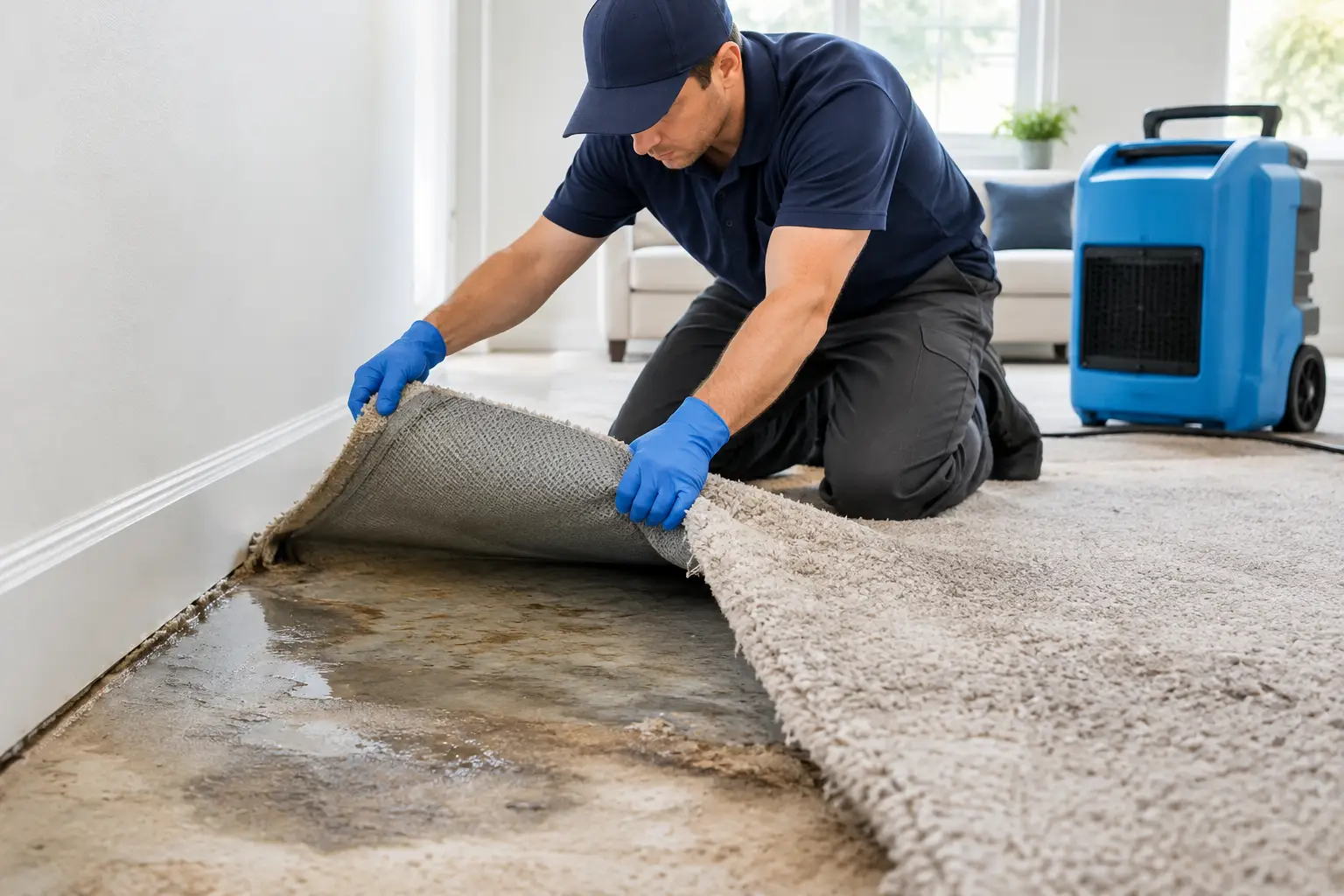
AI-generated illustration supplied by Soro; not an AWDR team or customer project photo.
After a leak, the carpet surface may look almost dry while padding or the subfloor remains damp. Whether the carpet can stay depends on the water source, how long the materials have been wet, visible damage and an assessment of the entire flooring assembly—not on a universal hour count. For homeowners and property teams around Seattle, Edmonds, Lynnwood and Everett, these questions can help organize a safer response.
Start with the source, not the carpet
A supply-line leak and a sewage backup should not receive the same cleanup plan. Confirm whether the source is known and has been stopped, and keep people out of potentially contaminated water. If electrical equipment or wiring may be wet, avoid the area and seek qualified help.
An inspection should establish what happened and what materials were affected. Do not assume that clear-looking water is sanitary or that every wet carpet must be discarded.
What the 24–48-hour guidance actually means
EPA guidance for clean-water damage describes rapid extraction and drying of carpet and backing, generally within 24–48 hours, along with drying the subfloor. That window is a prevention guideline, not a guarantee that carpet will be safe to keep or an automatic disposal deadline.
For carpet that cannot be cleaned and dried promptly, especially after outdoor flooding or suspected sewage contamination, removal may be the appropriate course. A qualified restoration professional should evaluate contamination, material damage and whether the assembly can be reliably dried.
Check the padding and subfloor
Carpet padding can retain water even when the pile feels dry. Wood, plywood, concrete or other subfloor materials can also remain wet. Determine whether water reached baseboards, adjoining walls, lower levels or neighboring units.
A restoration assessment may include moisture readings, access beneath the flooring and repeated observations. Thermal images show temperature patterns; they do not, by themselves, prove an area is wet or dry. See AWDR's guide to structural drying at https://americanwaterrestorations.com/blog/how-structural-drying-works.
Signs removal needs to be considered
Potential warning signs include suspected contaminated water, persistent wetness, strong odor, visible growth, damaged backing, damaged padding or a subfloor that cannot be dried adequately without access. The presence of one warning sign calls for assessment rather than a one-size-fits-all decision.
Avoid pulling up sewage-soaked carpet yourself, running fans on suspected contaminated materials, or using a household vacuum for standing water. If there is a contamination or electrical concern, restrict access until an appropriately equipped professional evaluates the area.
Record the decision and the next trade
When conditions permit, photograph the affected rooms and write down when the water was discovered, the suspected source, actions already taken and areas of visible damage. Ask the mitigation team what they measured, why a material is being kept or removed, and how drying will be verified before finishes return.
For condos, HOAs and rental buildings, record which units and common areas were checked without posting tenant names or private records. Insurance coverage and reimbursement depend on the policy and insurer; a restoration article cannot determine either.
Ask AWDR about an assessment
American Water Damage Restoration LLC provides water damage mitigation and drying support in the Greater Seattle area. For a current response discussion, call (206) 771-7040 or see https://americanwaterrestorations.com/services. Availability and scope are confirmed for the actual property.