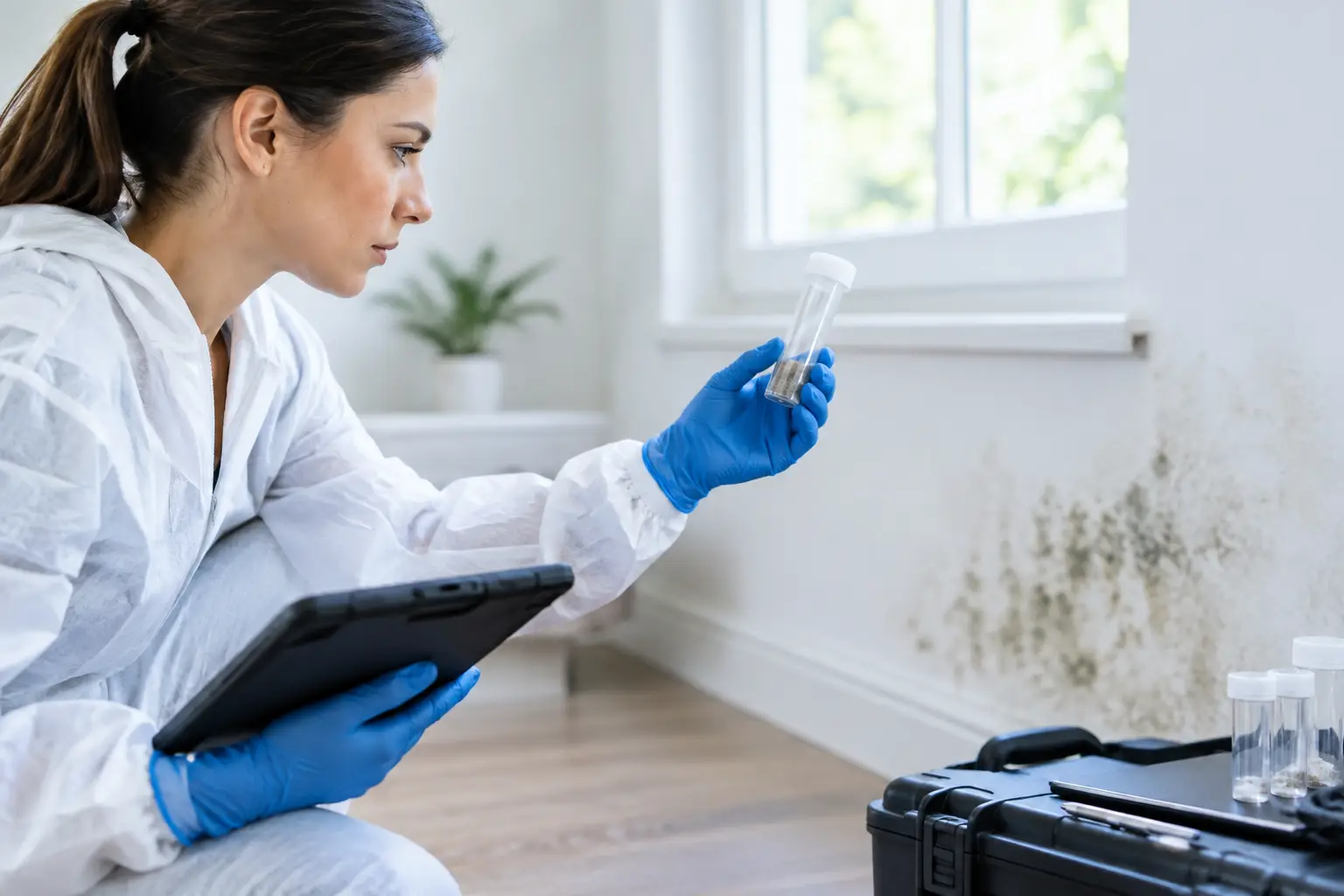
AI-generated illustration supplied by Soro; not an AWDR team or customer project photo.
A mold job is not finished simply because visible growth has disappeared. The archived Soro guide describes clearance as a checkpoint between cleanup and reconstruction. For Greater Seattle property owners, the useful question is what was inspected, what criteria were used, and what still needs correction.
What a clearance result means
Mold clearance is a post-remediation evaluation against a defined project protocol. It may include visual observations, moisture measurements and, when appropriate, samples. It does not establish that a building has zero spores or guarantee that every occupant can safely return.
EPA explains that there are no federal limits for airborne mold concentrations. A laboratory number is therefore not a universal federal pass-or-fail score. Ask the evaluator to explain the criteria and limitations in the report.
Agree on the scope before work starts
Before demolition, establish who will evaluate the finished work, which areas are included and what conditions must be met before rebuilding. Ask whether an independent assessor is appropriate for the project and who is responsible for unresolved findings.
The moisture source must be addressed as part of the recovery plan. A test result cannot repair a roof leak, plumbing defect or chronically damp crawlspace. Keep the source-repair work and the remediation work clearly assigned.
Look beyond one air sample
A practical evaluation considers whether the work area is visibly clean, whether damaged materials and debris have been addressed, and whether moisture measurements support the intended next step. Ask where measurements were taken and what comparisons were used.
Sampling is not automatically required for every mold problem. EPA notes that visible growth often makes sampling unnecessary for establishing that a problem exists, while surface sampling may help evaluate cleaning. Sampling design and interpretation require relevant professional expertise.
If findings remain unresolved
Ask for a written description of each unresolved condition and the proposed correction. Further cleaning, drying, source repair or evaluation may be needed before finishes conceal the area. A follow-up assessment should use the agreed protocol.
Keep inspection reports, photographs, moisture records and the authorized scope together. These records help the owner, assessor and remediation team communicate; they do not guarantee insurance coverage or a particular health outcome.
Plan the restoration handoff
Confirm what has been evaluated and what has not before authorizing reconstruction. Keep occupants out of restricted work areas and direct individual health questions to a healthcare professional.
American Water Damage Restoration LLC provides mold-remediation and water-damage restoration support in Greater Seattle. Call (206) 771-7040 to discuss the property and scope. Independent environmental assessment, laboratory interpretation and occupancy decisions are separate services.
Read EPA's explanation of sampling limits: https://www.epa.gov/mold/mold-testing-or-sampling. See AWDR services at https://americanwaterrestorations.com/services.