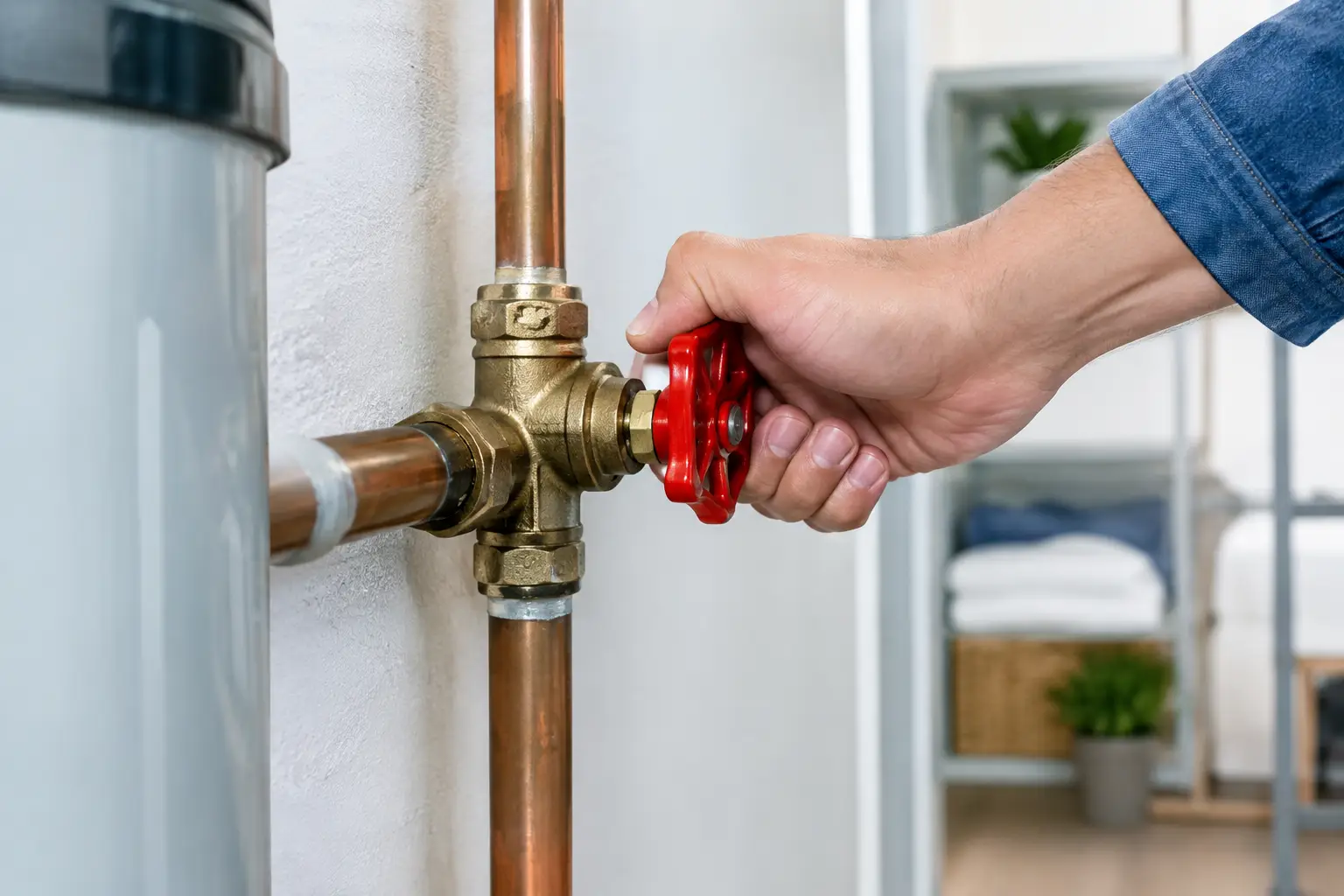
AI-generated illustration supplied by Soro; not an AWDR team or customer project photo.
A failed supply line can release water while someone is still searching for the shutoff. This archived Soro guide focuses on preparing for that moment: identify the correct domestic-water valve, keep it accessible and know who to call if it will not work.
Identify your valves before an emergency
Ask a qualified plumber or building manager to show you the domestic-water shutoff and any fixture valves you may safely operate. Label the valves and keep access clear.
In apartments, condos and commercial properties, establish who may operate shared valves and who must be notified. Do not treat fire-suppression piping or unknown utility controls as ordinary household-water shutoffs.
Choose a safe, accessible shutoff
A known fixture valve may isolate a sink, toilet or appliance supply leak. A building main may be needed when the leaking supply cannot be isolated. Follow the identification and operating instructions for the actual valve.
Do not cross standing water, reach around damaged wiring or enter an unsafe crawlspace to reach a valve. Keep away from sagging ceilings and water near electrical equipment. Seek qualified help when access is unsafe.
Do not force a stuck valve
Older valves may seize or leak when disturbed. If the valve will not move or closing it does not stop the supply, contact a plumber or your water utility. Do not use extra leverage to force an unfamiliar valve.
Common valve designs operate differently. Have the correct movement demonstrated in advance; a generic instruction to turn every handle the same way is unreliable.
Know the boundary at the meter
Seattle Public Utilities recommends using the home's shutoff where possible. Its guidance allows customer operation only for specific top-shutoff meter valves; older meter types require SPU crews.
Other utilities may have different equipment and rules. Confirm your own provider's instructions before an emergency. Do not assume that a street-side meter valve is available for you to operate.
Seattle's published instructions are at https://seattle.gov/utilities/your-services/water/metering/how-to-shut-off.
Water already inside still needs attention
Stopping incoming supply water does not remove water already in floors, walls, insulation or cabinets. Dripping may continue from affected materials after the supply is isolated.
Keep people away from electrical hazards and potentially contaminated water. Record the discovery time, suspected source and visible damage from a safe location. Do not use a household vacuum on standing water.
A supply shutoff does not stop every source of water: roof leaks, groundwater and sewer backflow require different responses. Avoid flushing toilets or opening fixtures merely to test a suspected sewer blockage.
Arrange the repair and drying assessment
A qualified plumber addresses the mechanical plumbing defect. A restoration team evaluates escaped water, affected materials and drying needs. Confirm both responsibilities before closing up finishes.
American Water Damage Restoration LLC serves Greater Seattle with water-damage mitigation and restoration support. Call (206) 771-7040 to discuss the conditions. Response time and scope depend on availability and site access; no arrival guarantee is implied.
See restoration services at https://americanwaterrestorations.com/services.