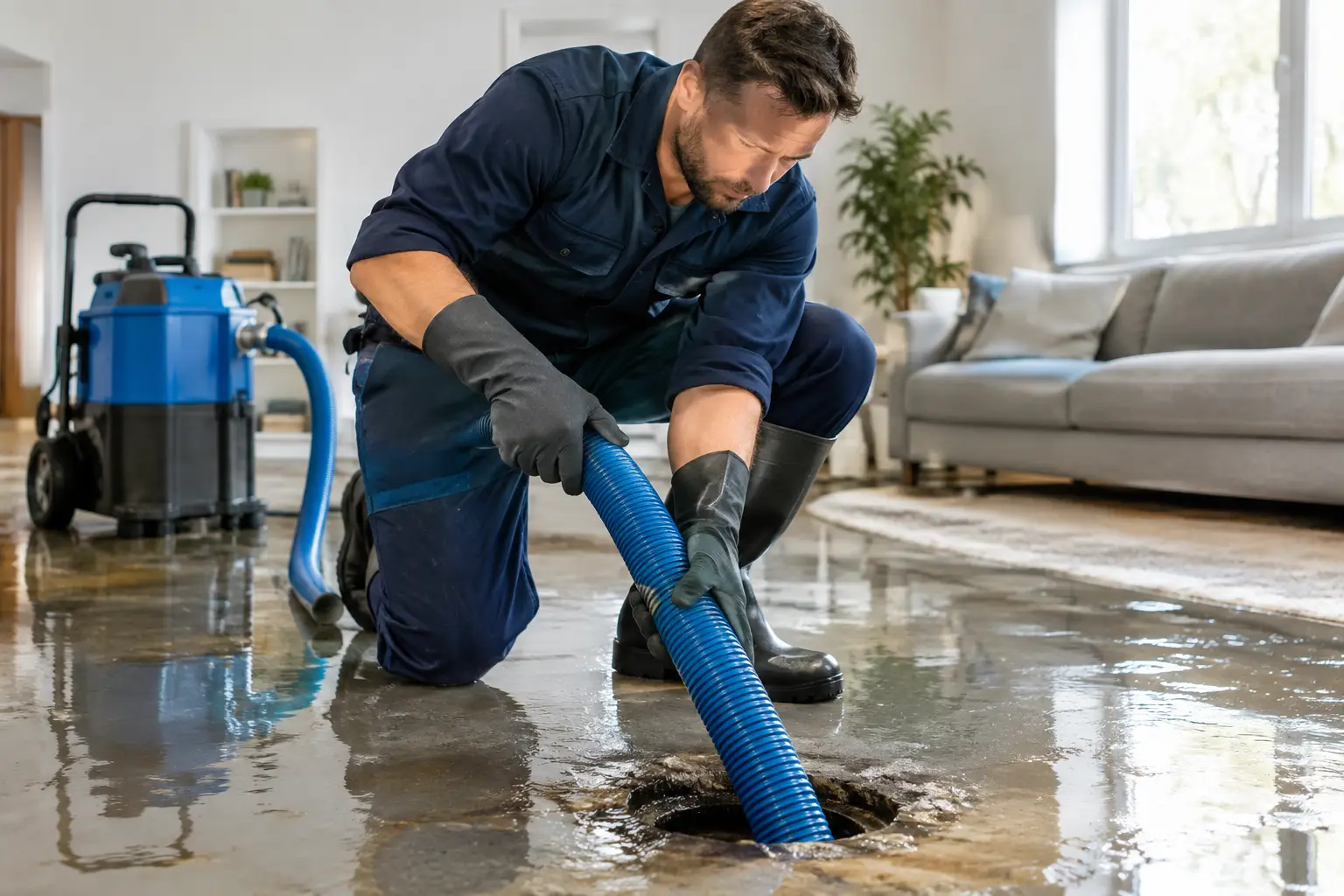
AI-generated illustration supplied by Soro; not an AWDR team or customer project photo.
When wastewater comes through a drain or toilet, the response must address contamination as well as moisture. This archived Soro guide helps Greater Seattle property owners organize access, source repair, cleanup and documentation without treating sewage as an ordinary clean-water spill.
About the illustration
The AI-generated scene is illustrative. It does not demonstrate safe sewage cleanup or the protective equipment required for a particular job.
Keep people away and stop adding water
Keep occupants and pets out of the affected area. Avoid using plumbing fixtures that may add water to the blocked system. Do not enter standing water near outlets, appliances, cords or electrical equipment.
Contact a qualified plumber or sewer professional to diagnose the backup. Closing a fixture supply valve may stop water feeding that fixture, but it does not stop sewage coming back through a shared sewer line. Notify the sewer utility when a public-system problem is suspected.
Separate source repair from restoration
Clearing a blockage and cleaning a contaminated room are different tasks. Ask who will address the drain or sewer problem and who will evaluate affected flooring, walls and contents.
Record which areas are restricted and how the team will prevent contaminated materials or equipment from being carried through clean spaces. Do not operate household fans across untreated sewage-affected materials.
Decide what can be cleaned
Washington State Department of Health advises that sewage-saturated wall-to-wall carpet and padding usually cannot be adequately cleaned. Other materials need assessment based on their condition and whether they can be effectively cleaned.
Ask for a written material-by-material plan. Surface drying alone does not establish that an affected item is clean. Keep questionable belongings separate and inform any contents-cleaning provider of the sewage exposure.
Leave hazardous cleanup and removal to appropriately equipped professionals. This article is not a chemical-mixing or do-it-yourself sewage-removal procedure.
Document from a safe location
If safe, record when the backup was discovered, which fixtures were affected, and whether water is still entering. Photograph visible conditions without entering contaminated or electrically unsafe areas.
Save plumbing reports, restoration scopes, photographs, readings and invoices. Ask your insurer about the actual policy and loss. Neither cleanup documentation nor a restoration contractor can promise coverage.
In rentals and shared buildings, notify the responsible manager and affected occupants through private channels. Keep tenant details, unit records and claim paperwork out of public posts.
Confirm cleanup and drying before repairs
Ask the team to explain its cleaning plan, moisture checks, removal decisions and remaining limitations. Drying supports recovery after contamination is addressed; it does not replace cleaning.
Re-entry and repair decisions depend on the property, the work completed and any required specialist or authority input. Do not rely on the appearance of a dry floor.
American Water Damage Restoration LLC provides sewage-cleanup and restoration support in Greater Seattle. Call (206) 771-7040 to discuss access and scope, or see https://americanwaterrestorations.com/services.
Public guidance
Washington Department of Health sewage-spill guidance: https://doh.wa.gov/emergencies/be-prepared-be-safe/severe-weather-and-natural-disasters/sewage-spills-cleaning-them.
EPA's clean-water drying table explains why contaminated-water work needs a different approach: https://www.epa.gov/mold/mold-remediation-schools-and-commercial-buildings-guide-chapter-4.
CDC electrical-safety guidance after a disaster: https://www.cdc.gov/natural-disasters/response/what-to-do-protect-yourself-from-electrical-hazards.html.
Seattle Public Utilities sewer-backup guidance: https://seattle.gov/utilities/your-services/sewer-and-drainage/side-sewers/backups. Contact the utility that serves your property.
Washington Office of the Insurance Commissioner claim-documentation guidance: https://www.insurance.wa.gov/insurance-resources/home-insurance/home-insurance-claims/filing-homeowner-insurance-claim.