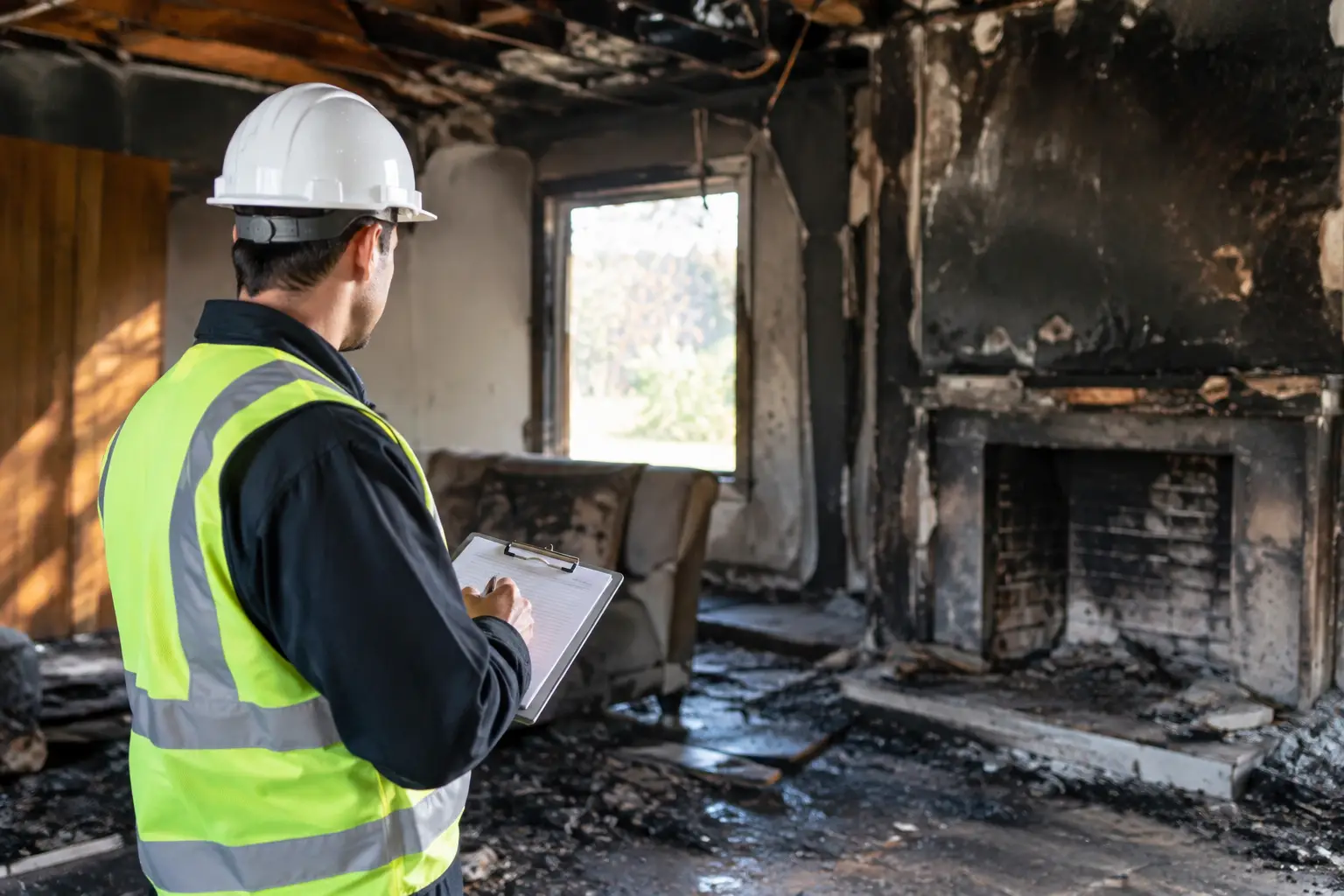
AI-generated illustration supplied by Soro; not an AWDR team or customer project photo.
The fire trucks leaving does not mean a damaged building is ready for occupants or repairs. For property owners in Edmonds and Greater Seattle, the next decisions involve safe access, securing the property, assessing smoke and water damage, and organizing the restoration work.
About the illustration
This illustration does not demonstrate safe entry or the protective equipment required for a fire-damaged property.
Wait for permission to enter
The U.S. Fire Administration advises staying out of a damaged home until the fire department says entry is safe. Damaged floors, walls, wiring and debris can remain hazardous after flames are out.
Follow any remaining access restrictions. If utilities were disconnected, do not restore them yourself. Qualified personnel must address unsafe electrical, gas or other systems.
Secure the property within the safe scope
Once access and the work area are authorized, discuss necessary temporary protection such as securing damaged openings. Roof access, structural stabilization and utility work may need separate qualified trades.
Agree who controls access and who communicates with occupants, the owner and contractors. In a shared building, identify affected common areas and adjoining spaces without publishing residents' private information.
Assess water as well as smoke
Firefighting water can affect flooring, wall cavities and lower levels. Ask the team to identify wet materials, assess contamination and explain the extraction and drying plan.
Measurements and follow-up observations should support drying decisions. A thermal image indicates temperature patterns; it does not independently establish moisture content.
Smoke and soot can affect areas beyond the visible burn. Avoid starting cleaning or operating affected equipment before it has been assessed. Ask which surfaces and contents need specialist attention.
Ask how cleaning and odor work will be verified
A restoration scope should distinguish cleaning, material removal, contents handling and any additional odor treatment. Ask what result can be checked before reconstruction begins.
Do not interpret a more pleasant smell or newly painted surface as proof that the underlying work is complete. Any treatment must fit the materials, site restrictions and product requirements. This guide does not recommend do-it-yourself ozone or fogging.
Keep records and a clear repair handoff
Contact the insurer and ask what documentation it needs. When safe, record damage and retain receipts and written scopes. Confirm who is paying for authorized work; documentation does not promise coverage.
Before rebuilding, ask what remains unresolved, whether additional inspection is needed, and which trades are responsible for structural, electrical and other specialist work.
American Water Damage Restoration LLC offers fire-and-smoke restoration support, water mitigation and restoration coordination in Greater Seattle. Call (206) 771-7040 to discuss the property's condition and the available scope. Field response depends on availability, location, access and site safety.
Source and service information
U.S. Fire Administration, After the Fire: https://www.usfa.fema.gov/downloads/pdf/publications/fa_46.pdf
Washington Office of the Insurance Commissioner, Filing a homeowner insurance claim: https://www.insurance.wa.gov/insurance-resources/home-insurance/home-insurance-claims/filing-homeowner-insurance-claim
FLIR, How to Detect a Water Leak with Thermal Imaging: https://www.flir.com/discover/professional-tools/how-to-detect-a-water-leak-with-thermal-imaging
AWDR fire and smoke restoration: https://americanwaterrestorations.com/fire-smoke-restoration