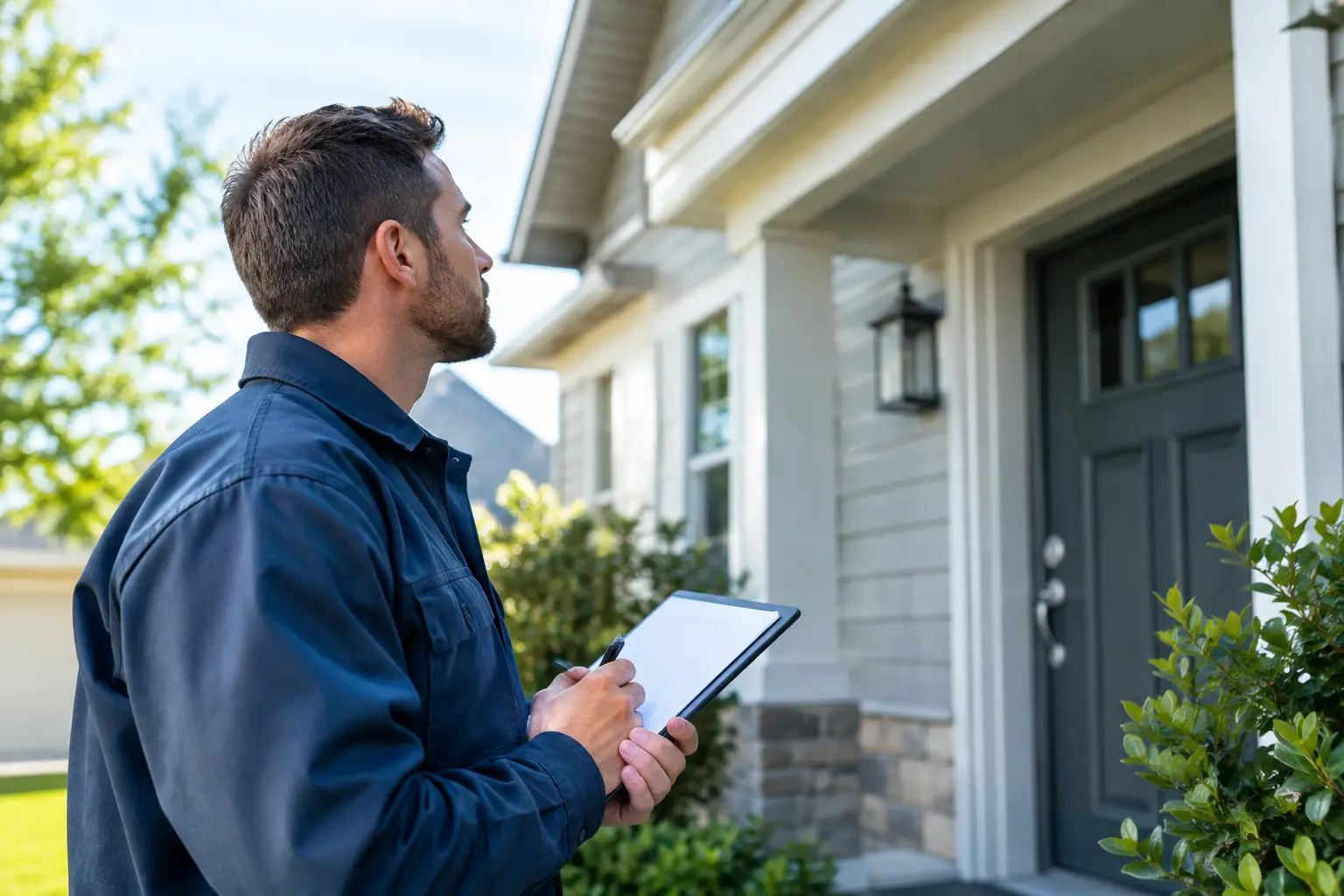
AI-generated illustration supplied by Soro; not an AWDR team or customer project photo.
After a storm, fire or major leak, protect people first and arrange safe temporary protection for damaged openings. A broken window, damaged door or roof opening may need attention before permanent repairs begin. Temporary protection should follow a safety assessment, with qualified help for hazardous work. [1,2]
1. Confirm safe access before anyone starts
Stay away from unstable walls, sagging ceilings, fallen power lines and damaged electrical equipment. For immediate danger, move to a safe location and call 911 or the appropriate utility. After a fire, wait until the fire department says entry is safe. Do not restore utilities that responders disconnected. [2,3,5]
Never enter standing water to reach a breaker panel or operate electrical equipment. Wet electrical equipment needs assessment by a qualified electrician before power is restored. [3]
2. Arrange protection for exposed openings
Once conditions permit, a qualified provider can assess broken windows, damaged doors and roof openings. Depending on the damage, temporary work may include boarding an opening or installing a suitable roof covering to limit further exposure. Washington's insurance commissioner recommends taking safe steps to limit additional damage and keeping temporary-repair receipts. [1,2]
Do not climb onto a damaged roof or work beneath loose materials to install a cover. Temporary boarding or tarping does not establish that a building is structurally safe or ready to occupy.
3. Ask for a clear temporary-work scope
Before authorizing work, ask the provider these five questions:
- Which damaged openings will you protect?
- Which work requires a roofer, electrician or another qualified specialist?
- What is the price or billing basis, and what is excluded?
- Who should check the temporary protection if conditions change?
- What assessment or follow-up is needed before permanent repairs?
Keep the written scope and emergency contact details together. Roof repair, water removal, drying and reconstruction may involve separate work and approvals. Ask what is included instead of assuming one visit completes every stage.
4. Record the condition and the work
From a safe location, photograph the damage before and after temporary work where practical. Note when you discovered the problem, who you contacted and what was done. Keep estimates, work authorizations and receipts. Do not enter a restricted area or delay urgent safety measures to take photographs. [1,2]
Contact your insurer or agent about the policy and required documentation. Discuss inspection and permanent-repair requirements before rebuilding. Keeping a receipt does not establish that an expense is covered; coverage depends on the policy and the facts of the loss. [1,4]
For a fuller explanation, read AWDR's Washington Home Insurance Claims: Your Rights and Next Steps.
5. Coordinate access and the next assessment
Keep children, pets and visitors away from affected areas. If you own a rental or manage a building, identify one contact to coordinate access with occupants and qualified providers. Keep a record of temporary protection and outstanding hazards.
A covered roof or boarded window does not resolve moisture already inside. Ask whether affected materials need a separate water-damage assessment before they are concealed by repairs.
Restoration help in Greater Seattle
American Water Damage Restoration LLC serves Edmonds and communities across King and Snohomish Counties. Contact AWDR about water mitigation, restoration documentation and reconstruction support. Describe the damage and any access concerns so the appropriate next step can be discussed.
Call (206) 771-7040 or email info@awdrestoration.com. Field response depends on availability, location, access and site safety.
General homeowner guidance; site conditions and qualified professional assessments determine the work needed.