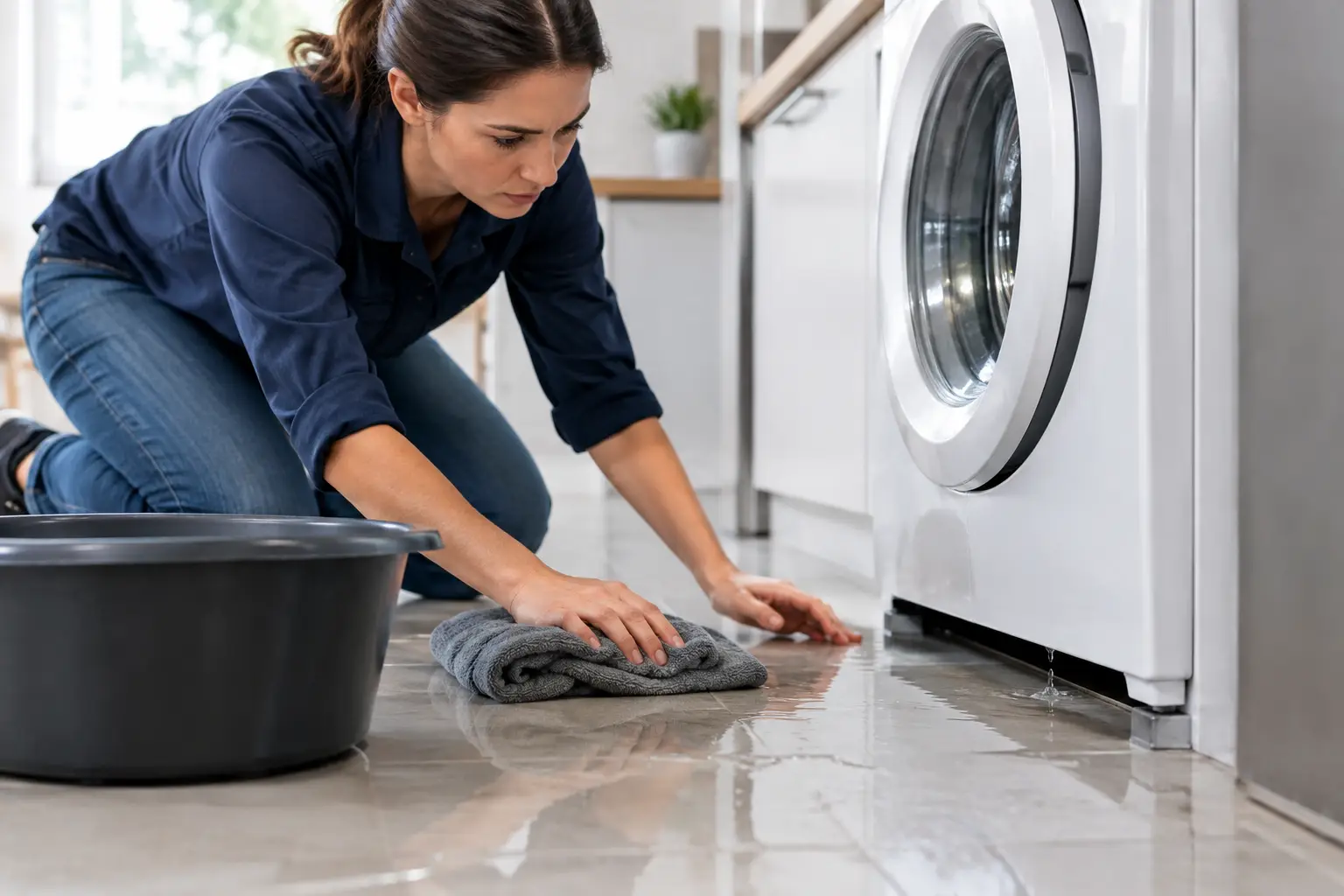
AI-generated illustration supplied by Soro; not an AWDR team or customer project photo.
A washing machine hose fails. A dishwasher leaks slowly under a kitchen cabinet. An upstairs refrigerator line drips into a ceiling cavity before anyone sees a stain. Appliance leak recovery can involve more than mopping up visible water. Early action helps limit the spread while qualified professionals assess the affected materials.
Start with safe, informed decisions
For homeowners, landlords and property managers, the priority is to protect people, stop the water only when it is safe, and arrange assessment of the wet materials. Water can reach adjoining rooms and concealed spaces in homes, condos and occupied apartment buildings.
What to Do When an Appliance Starts Leaking
Keep clear of standing water and wet electrical equipment. Do not touch an appliance, cord, outlet or electrical panel when it is wet or when you are standing in water. If a water shutoff is safely accessible from a dry location, use it to stop the supply. If electrical safety is uncertain, call a qualified electrician; call 911 for immediate danger.
Move furniture, rugs, boxes, and other contents out of the wet area when possible. Place towels at doorways to limit spread, but do not assume a dry-looking floor means the water is contained. Water can move under baseboards, beneath vinyl and laminate flooring, into cabinets, and through subflooring before it becomes obvious.
Take photos and short videos from a safe location before extensive cleanup begins. Record the appliance, visible water, affected contents and staining below the room. Photograph a failed connection only if it is safely visible. Keep observations separate from a cause that has not yet been confirmed.
Arrange a qualified assessment when water reaches building materials or concealed spaces. Prompt water removal and appropriate drying can help limit further damage. The required work depends on the source, extent, duration and materials involved.
Why Appliance Leak Recovery Is Often More Complex Than It Looks
Appliance failures range from sudden clean-water losses to long-term leaks that have already created microbial growth. The recovery plan depends on the source, how long the water was present, where it traveled, and what materials were affected.
Water from a supply line, appliance discharge and a backed-up drain may require different cleanup precautions. Appearance alone does not establish that water is clean. Ask the responding professional to assess contamination before deciding which materials can be cleaned, dried or removed.
The materials matter. Check the subfloor and wall edges as well as the visible floor. Some wet materials may be dried in place; others may need removal because of damage, contamination or an inability to dry thoroughly. Swollen or damaged materials need an individual assessment.
A technician should not base drying decisions only on what is visible. Moisture measurements and targeted inspection help assess affected materials. Thermal imaging can suggest areas to investigate; it does not by itself prove that a material is wet or dry. Ask what drying goal applies and how completion will be checked.
Slow leaks create a different kind of risk
Slow leaks may remain hidden. A dishwasher leak can wet cabinet bases and flooring, and a refrigerator line may affect a wall cavity without leaving an obvious puddle. Staining, odors or swollen trim are reasons to arrange an inspection; they do not establish a cause on their own.
Evidence of a slow leak may call for checks beyond the visible surface. Ask whether concealed materials need inspection and whether contamination or hazardous-material evaluation is needed before anything is disturbed. The scope should follow verified conditions; every leak does not require demolition.
The Professional Recovery Process
A useful appliance leak recovery plan should explain immediate safety precautions, the proposed assessment, the authorized work and who will provide updates. Ask about current response availability when contacting American Water Damage Restoration LLC.
1. Stop the loss and inspect the full moisture path
Address the water source and coordinate the affected-area assessment. A licensed plumbing contractor or qualified appliance service provider may be needed to repair the failed component. Restoration work should also consider adjoining rooms, lower ceilings, wall cavities and cabinets where water may have traveled.
In a condominium or apartment building, this step also includes identifying whether another unit may be affected. A leak from an upper-floor laundry room can become a multi-unit event quickly. Prompt communication with tenants, owners, HOA representatives, and property managers keeps the response organized.
2. Extract water and protect salvageable contents
Removing accessible water with suitable equipment is part of many recovery plans. The restoration team should assess contents and building materials separately and explain what can be cleaned or dried. Use specialists for items that need special handling.
The team should also protect unaffected areas with containment and floor protection. This matters during both emergency mitigation and later reconstruction, particularly in occupied homes and commercial spaces.
3. Dry, monitor, and document the structure
Drying equipment should be selected for the affected materials and site conditions. Ask how moisture will be measured, how progress will be recorded and what will establish completion. Do not start fans before the water has been assessed as clean or sanitary, and do not direct airflow across suspected mold.
Contaminated water or suspected mold changes the work plan. Ask a qualified professional about containment, protective equipment, cleaning and any materials that cannot be retained. Drying equipment alone does not resolve a contamination problem.
4. Build an insurance-ready scope and complete repairs
Before mitigation ends, clarify who is responsible for source repair, drying documentation and any reconstruction. A written handoff helps the owner understand what has been completed, what remains open and which work requires another qualified trade.
Keep photographs, moisture records, drying logs where applicable and itemized estimates together. Ask your agent or insurer what the policy covers and what evidence it needs. A contractor cannot promise coverage or payment, and documentation does not guarantee claim approval.
Common Appliance Leaks and What They Can Damage
Inspect accessible washing-machine hoses and connections according to the appliance manufacturer instructions. Have worn or leaking parts addressed by an appropriately qualified provider. A leak on an upper floor may also affect the ceiling or insulation below.
Dishwasher leaks commonly affect toe kicks, cabinet bases, kitchen flooring, and the wall behind the appliance. Do not ignore a recurring puddle at the front edge or a musty smell in the sink cabinet. A small leak can spread beneath an entire run of flooring.
A refrigerator leak may involve a water connection, drain or another appliance component. Have the cause checked rather than assuming a puddle identifies the failed part. Do not move a heavy appliance through water or pull on its connections to inspect behind it.
Water-heater leaks can also affect garages, utility rooms and finished spaces. Keep clear of wet electrical or gas equipment and arrange the appropriate qualified trade assessment. A drain pan is not proof that surrounding materials remained dry.
When to Treat the Leak as an Emergency
Seek prompt qualified help when water is spreading, another floor or unit may be affected, or contamination or mold is suspected. For immediate danger, fire, suspected gas leakage or an electrical emergency, move to safety and contact emergency services first.
Do not use a dry-looking surface as proof that the building assembly has dried. EPA guidance emphasizes prompt response to water damage and checking material conditions, including flooring underneath. Ask for assessment before concealing affected areas with new finishes.
Protect Your Property Before the Next Leak
Follow the appliance manufacturer maintenance instructions, inspect safely accessible connections, and address recurring moisture. Periodic checks are useful for vacant homes and rental turnovers because a leak can continue while nobody is present.
Do not let the visible puddle define the whole problem. Safe source control, assessment of affected materials and documented drying help organize the recovery and repair decisions.
Restoration help in Greater Seattle
For water-damage restoration inquiries in Greater Seattle, King County and Snohomish County, contact American Water Damage Restoration LLC at (206) 771-7040 or info@awdrestoration.com. Field response depends on availability, location, access and site safety.